image
Wildlife & Conservation

Wildlife-Safe Rodent Control

An Owl Friendly Guide for Rodent Control in South West Australia

wave

Capes Raptor Centre rehabilitates and releases many birds of prey each year, while also providing lifelong sanctuary for those that cannot return to the wild.

One of the most common and preventable reasons raptors arrive in our care is poisoning. Not because they ate poison directly, but because they ate the rats and mice that did.

Birds of prey are nature’s own pest controllers, helping to keep rodent populations in balance. But when those rodents have consumed poison, the toxin can pass on to the predators that eat them. Over time, repeated exposure can build up, especially in animals that regularly feed on rodents.

This is known as secondary poisoning, and it means the choices we make around rodent control at home, on farms and in sheds can affect far more than the target pest.

Barn owl holding a mouse in its beak after catching it

A barn owl with a mouse. Rodents are a key food source for many birds of prey.


The poison that keeps on giving

Rodent poisons can harm wildlife in two main ways.

  1. Primary poisoning occurs when an animal eats bait directly.
  2. Secondary poisoning happens when a predator eats a rodent that has already consumed poison.

Many rodent baits contain anticoagulant chemicals that prevent blood from clotting. The most potent types, known as second-generation anticoagulant rodenticides (SGARs), can remain active in animal tissue for weeks or months after a rodent has died. Because birds of prey regularly eat multiple rodents, the toxin builds up in their bodies over time.

The good news is there are better options, and small changes make a real difference.

Four wildlife-friendly ways to manage rodents

1. Start with prevention

The most effective rodent control often begins before rodents arrive. Making your property less attractive to rodents can prevent problems before they start:

  • Keep vegetation trimmed and remove piles of garden waste, fallen leaves and plant cuttings
  • Prune dense hedges and bushes that provide shelter
  • Pick up fallen fruit from trees regularly
  • Store animal feed and grain in sealed containers
  • Secure compost bins and food scraps
  • Use poultry or bird feeders that prevent spillage, such as treadle feeders that rodents cannot access
  • Seal gaps in roofs, walls and sheds where rodents might enter
  • Install lighting inside roof cavities and sheds to deter rodents from nesting

Removing food and shelter can often solve a rodent problem before traps or poison are needed.


2. Use traps where appropriate

If rodents are already present, trapping can be a safer option than using bait.

Some native animals can easily be mistaken for rats or mice, so it is important to check what animal is present before setting traps. The South West is home to native rodents and other small mammals, including bush rats, quenda and mardo, that may sometimes be confused with introduced pest species.

The Australian Museum identification guide is a useful place to start: Is it a rat?

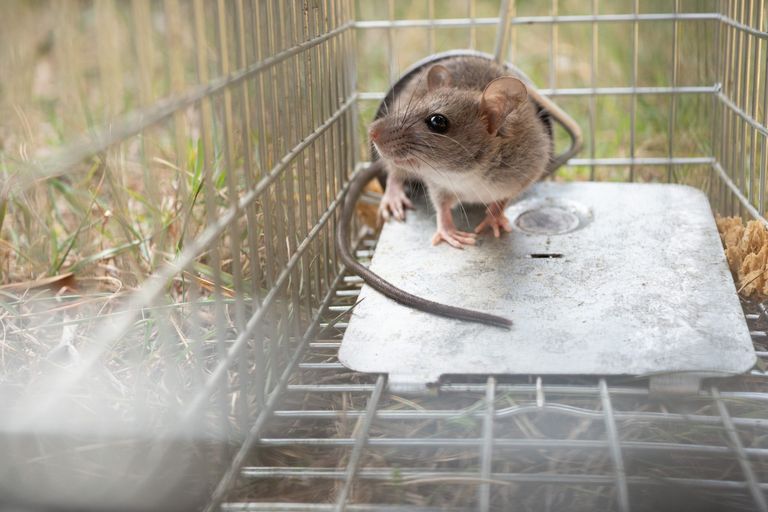
Rat inside a live capture trap placed on the ground

Once you have confirmed that you are dealing with introduced rats or mice:

  • Live traps are the safest option, as they avoid unintentionally harming native wildlife. Traps should be checked regularly.
  • Snap traps can be effective when placed inside buildings only, where native wildlife, possums, reptiles and pets cannot access them.

Sticky traps should never be used. They can trap any animal that comes into contact with them, including birds, reptiles and other wildlife, often causing prolonged suffering or serious injury.

3. Encourage natural rodent control

Owls and other birds of prey rely on rodents as a natural food source and help keep rodent populations in balance.

A breeding pair of barn owls can consume thousands of rodents each year, making them one of nature’s most effective forms of rodent control.

You can help support these predators by:

  •  installing nest boxes for owls or other hollow-dependent species
  • protecting mature trees that provide roosting and nesting habitat
  • reducing unnecessary outdoor lighting at night

Western Australian environmental scientist Dr Simon Cherriman provides excellent resources on building nest boxes for owls using recycled materials.


4. Bait only as a last resort

Rodent bait should only be used when other control methods have not resolved the problem.

If bait must be used:

  • place bait inside a tamper-resistant bait station
  • position bait stations where pets and wildlife cannot access them
  • follow all label instructions carefully
  • remove rodent carcasses promptly where possible to reduce the risk of wildlife poisoning

Even products labelled “wildlife friendly” can be misleading. Always check the active ingredient on the label before purchasing or using rodent bait.

Ingredients to avoid

These second-generation anticoagulant rodenticides (SGARs) remain active in animal tissue for long periods and carry the highest risk of secondary poisoning:

  • Brodifacoum
  • Bromadiolone
  • Difenacoum
  • Difethialone
  • Flocoumafen

A simple way to remember: most of these higher-risk ingredients begin with B or D and for wildlife, B and D is bad.

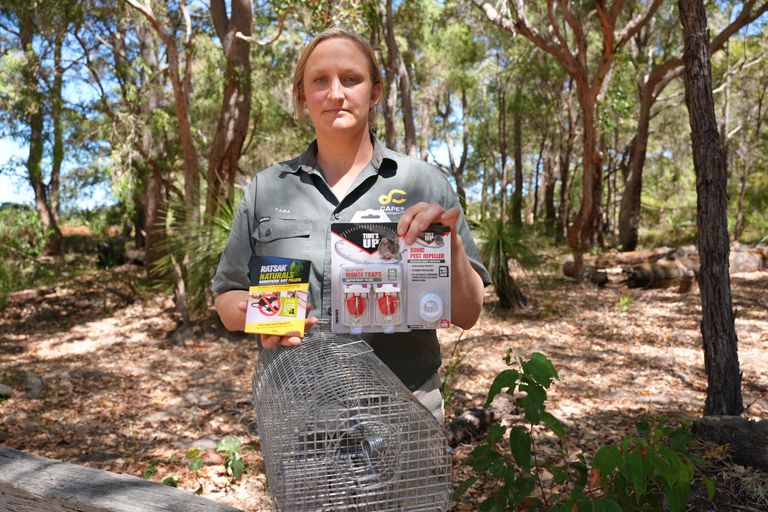
Capes Raptor Centre staff member holding rodent control products beside a live capture trap

Lower-risk alternatives

Some first-generation anticoagulant rodenticides are less persistent in animal tissue and are generally considered lower risk for wildlife than second-generation products. Active ingredients include:

  • Coumatetralyl
  • Warfarin
  • Diphacinone

Some non-anticoagulant rodenticides are also available. For example, products containing corn gluten meal, such as Ratsak Naturals, use a different mechanism and do not persist in animal tissue in the same way as anticoagulant poisons. These products are generally considered to carry a lower risk of secondary poisoning to wildlife.

All rodenticides should still be used carefully and according to label instructions.

If working with a licensed pest controller, ask about their methods and choose providers who prioritise wildlife-safe practices.


What is changing in Australia?

Rodent poisons are regulated in Australia by the Australian Pesticides and Veterinary Medicines Authority (APVMA). Following a national review of anticoagulant rodenticides, the regulator found that some of the most commonly used rat poisons can pose significant risks to wildlife and other non-target animals.

In March 2026, the APVMA certified that products containing second-generation anticoagulant rodenticides should be classified as restricted chemical products. This means stronger controls are being introduced around how these products are supplied, labelled and used.

These changes are intended to reduce unintended poisoning of wildlife while still allowing rodents to be managed where necessary.

Working together to protect wildlife

Rodents can be challenging to manage, but the methods we choose to control them can have wider consequences for the wildlife around us.

By starting with prevention, supporting natural predators and using bait only as a last resort, we can reduce the risk of poisoning in the environment.

These choices help protect owls, eagles and other birds of prey, as well as many other native animals that share the same food webs across Australia’s South West.

Across the region, community initiatives such as Owl Friendly Margaret River are helping raise awareness about the impacts of rodenticides and sharing practical alternatives for managing rodents safely.

We joined Owl Friendly Margaret River on Capes Conversions, a South West radio show, to discuss the importance of protecting our raptors. You can listen to the podcast here.

To learn more about birds of prey and their conservation, visit the Capes Raptor Centre.

Capes Raptor Centre staff member with a Boobook Owl perched on her glove, during a VIP Owl Experience.